



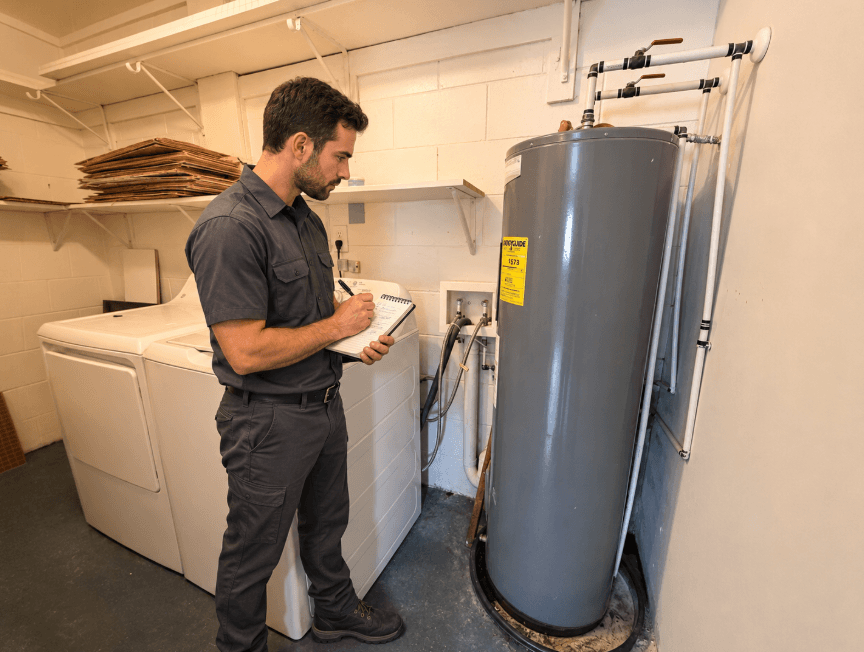
- Trace water back to a fitting or the tank body.
- Test electric heating elements and thermostats.
- Check gas ignition, drain valves, and sediment when the symptoms point there.
We do water heater repairs and installs differently at Cape Coral Water Heater Experts. Our unique method first diagnoses the issue prior to recommending any services.
Our Services Include
We have over 12 years of experience with repairs, maintenance, and business development. With modern technology tankless water heaters have become extremely popular in the Cape Coral FL area for good reason. But there are instances where tank water heaters may be the best solution. We lay out all options for our homeowners so they can make the most informed decision.
| Service | Budget Range | Scope |
|---|---|---|
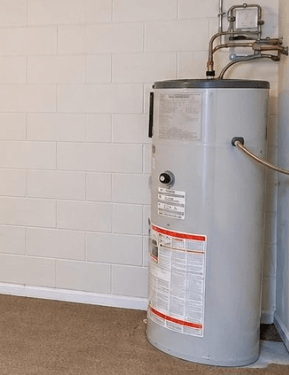
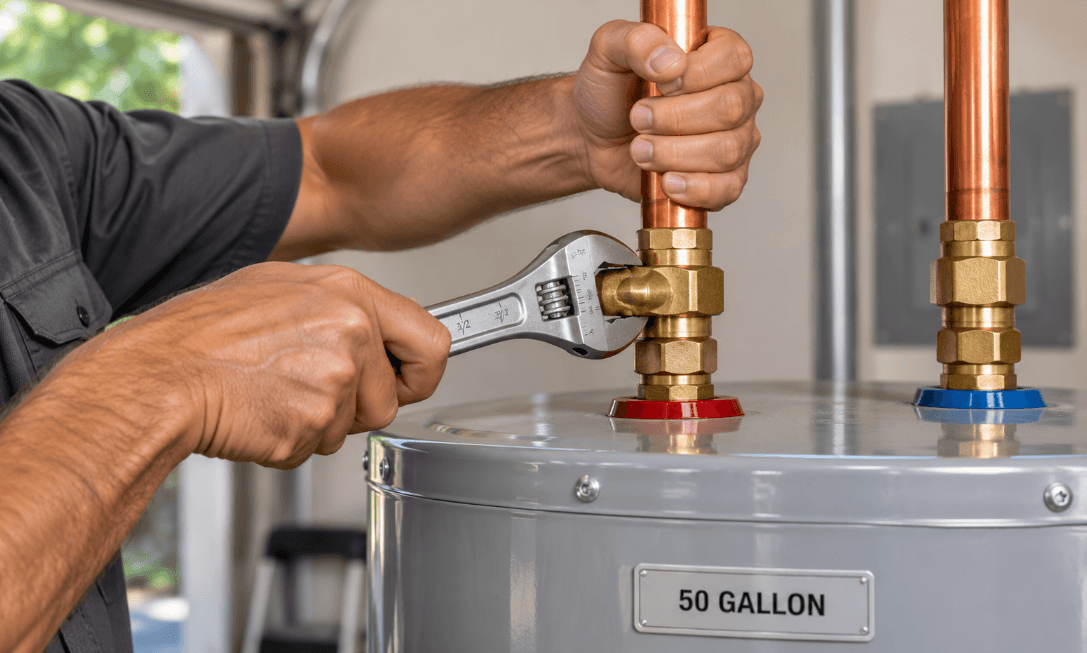
| Water tank repair | $170–$450 | Common repairs involving an electric element, thermostat, or temperature and pressure relief valve on a serviceable tank. |
| Water tank flush maintenance | $104 | Routine sediment flush on a serviceable storage tank with a working drain valve. |
| Standard electric water tank replacement | $1,625–$2,475 | Standard 40 or 50 gallon electric tank replacement with installation, basic fittings, and old tank removal. New locations and utility changes require separate pricing. |
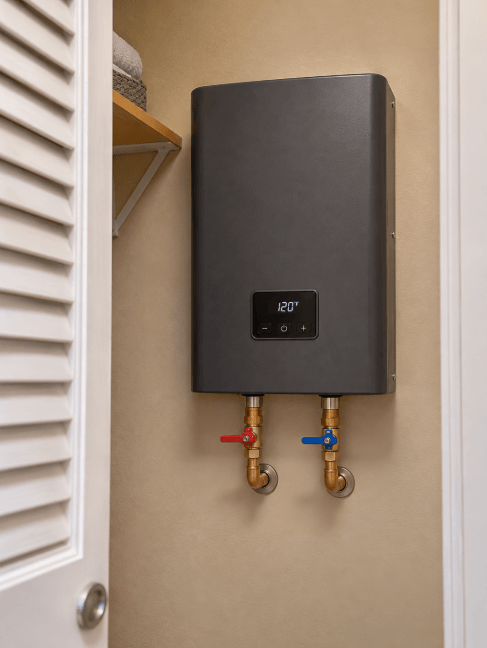
| Tankless water heater repair | From $693 | Starting budget for a tankless repair. The model and failed part determine the scope. |
| Tankless water heater installation | $3,475–$5,175 | Whole-home gas tankless installation with gas connection and venting work. Electric installations and unusual utility upgrades have a different scope. |
Fix the failed part when the tank still holds water and meets your needs.
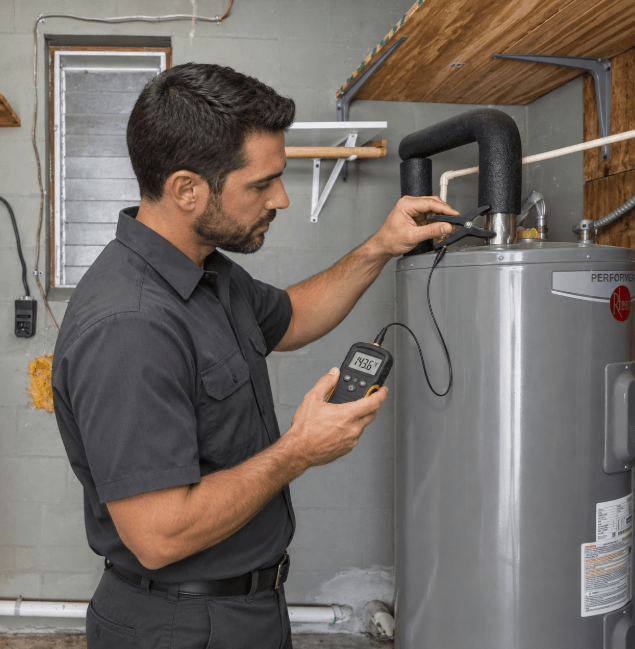
Start with what changed. If one shower runs cold while the other taps stay hot then check the shower fixture first. If every tap runs cold then look at the heater and its supply. On a typical two element electric tank a failed lower element can leave you with a short burst of hot water followed by cooler water. An upper element or thermostat fault can take away most or all of the heat. A technician can test the elements and thermostats and replace the bad part. On a gas model a worn igniter or flame sensor may keep the burner from starting or staying lit. The model and test results tell you which part to address.
Trace moisture upward before you condemn the tank. A loose connection at the top can send water down the jacket and make it look like the base is leaking. A drain valve may drip because grit keeps it from closing fully or because its seal has worn out. A technician can repair the connection or replace a faulty valve if the tank and its threads are sound. A relief valve needs a different check because it may be responding to excess pressure or temperature. Find out what triggered it before replacing it.
Read the manufacture date and ask how the heater has performed lately. An older tank that stays dry and keeps up with demand may still justify a simple thermostat or element repair. A much newer tank can develop corrosion or a leak if its protective anode wears out early or its system puts it under excess pressure. Check the tank condition, service history, part availability, and warranty before you decide. Age matters most when you weigh a costly repair against the chance that another part may fail soon.
For a seasonal Cape Coral home it helps to know when the heater last ran normally. Write down whether you lose hot water on the first draw after arriving or after several showers. A symptom that starts after an electrical interruption gives the technician a different lead than a drip that grows during each heating cycle. Take a photo of the area around the heater before wiping up a small leak so the technician can see where the moisture appeared.
Choose a new tank when the vessel leaks or the current setup no longer fits the home.
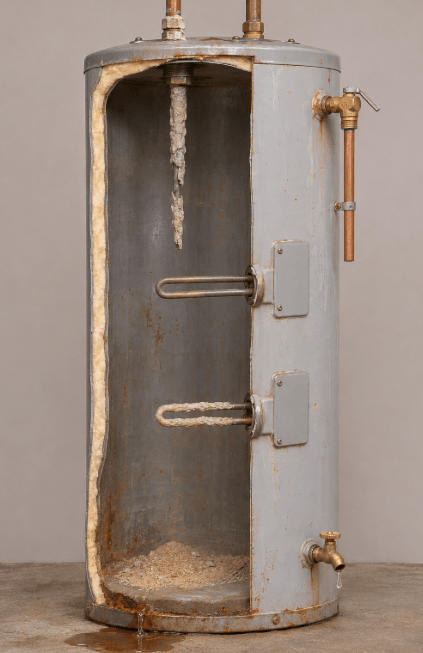
A puddle at the base can come from a valve or pipe above the tank. A technician should trace the leak before recommending replacement. Once water escapes through the tank wall or a welded seam the vessel has failed. Replacing a fitting or anode will not restore that wall. Rust around the base may point to long term moisture from an external leak or corrosion inside the tank. Rust colored water can also come from supply pipes. Look at where the rust appears and whether the cold taps show the same color before drawing a conclusion.
The anode rod gives up its own metal to help protect exposed steel where the tank lining does not cover it. Once the rod wears down the steel loses that protection and corrosion can eventually eat through it. Mineral deposits also settle at the bottom. They can cause rumbling and block the drain before the tank itself fails. A closed plumbing system adds another possibility. Heated water expands and pressure can climb if that expansion has nowhere to go. If a heater fails early or the relief valve keeps discharging then check for pressure or expansion problems before installing the next unit.
Keep the existing location and fuel type when they still work for the home. A direct swap can limit changes to plumbing and utilities. If the old tank ran out after the second shower even while it worked properly then compare first hour ratings before buying another tank with the same gallon capacity. That rating combines stored hot water with the amount the heater can recover during its first hour. Check the new tank dimensions and the path through the doorway. Ask whether the estimate includes the unit, removal, required connection changes, and any permits that apply to the property.
In a condo the nearest shutoff may serve more than one unit. Find out who can operate it and when. In a garage check where the pan can drain and whether the location gives you access to the shutoff without moving stored items. Confirm who will remove the old heater and leave room to reach the drain valve and electrical covers on the new one. Those details matter more to the scope than the gallon number alone.
Gain floor space and heat water on demand if your home can support the setup.
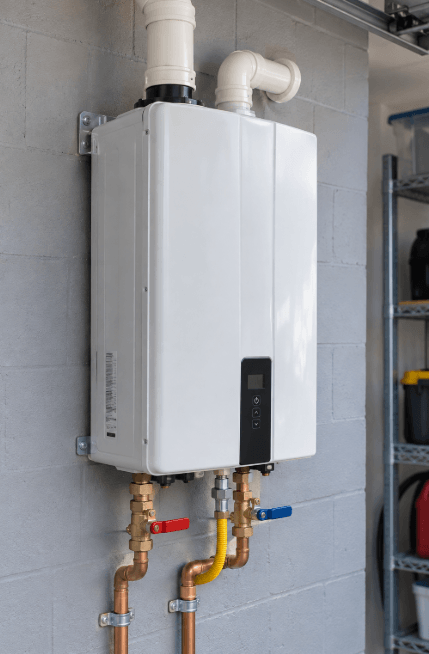
A wall mounted heater can free up the corner where a storage tank stood. That may be valuable in a laundry room or utility closet where floor space is tight. The unit heats water as you draw it so you do not keep a full tank hot between uses. It can also keep supplying hot water during a long shower as long as the demand stays within its capacity. It does not make a distant faucet hot instantly. Water sitting in the supply line still needs time to clear. If that wait matters then ask whether the model and plumbing layout can support recirculation.
Size a tankless heater for the fixtures you actually run together and the temperature rise the heater must deliver. For example an inlet at 75°F needs a rise of 45°F to reach a 120°F outlet. An inlet at 55°F needs a rise of 65°F at the same outlet setting. Those are illustrative temperatures. At the same flow the second example takes about 44% more heat. A unit with a fixed maximum output generally supplies fewer gallons per minute as that required rise increases. Compare each model at the expected cold inlet temperature and peak flow so a second shower does not push the unit beyond its capacity.
An existing gas connection helps only if the line and meter can deliver the required input while other appliances run. A gas unit also needs a suitable vent route or approved outdoor location. A condensing model may need condensate drainage. A whole home electric unit can require several dedicated circuits and enough panel and service capacity to support them. Include those upgrades in the estimate. A tank can still be the better choice if a straightforward replacement meets the household demand and avoids major utility work. Also compare model specific maintenance and running costs. Saving floor space does not automatically make a conversion cheaper.
Leave enough clearance to reach the isolation valves and inlet screen after shelves or cabinets go in. If the property uses well water then check its chemistry and pressure at the house. Cape Coral treats city water with reverse osmosis but a private well may produce different results. Choose a maintenance plan based on the water that enters your heater and the manufacturer instructions. During startup run the combination of fixtures the household actually uses so you can see how the heater performs under that load.
If every tap cools after a few minutes then check tank capacity and heating recovery or whether a tankless heater has stopped firing. If one shower changes temperature while the kitchen tap stays hot then the shower valve may be the issue. Note which fixtures are affected and whether the temperature changes when another fixture opens.
Have your ZIP code, the heater model, and a short description of the symptoms ready. If you want to replace a unit then measure the opening around it and mention any stairs or shared shutoffs. A clear photo of the rating plate and connections helps define the job.
It can if the well system supplies the pressure and flow the model requires. A technician should check both while fixtures run and look at the condition of the inlet filter. Well water chemistry can vary by property. Use the model manual and water test results when planning maintenance or treatment.
A heater that fits the old location and works with the existing connections is usually simpler to replace. A different tank footprint, inaccessible shutoff, or changes to power and drainage can add work. Ask for those items separately when comparing a quote with a Cape Coral budget range.