Get to the cause of short showers, popping sounds, or water under the tank. We trace the leak or test the heating controls before recommending a repair.
Trace water back to a fitting or the tank body.
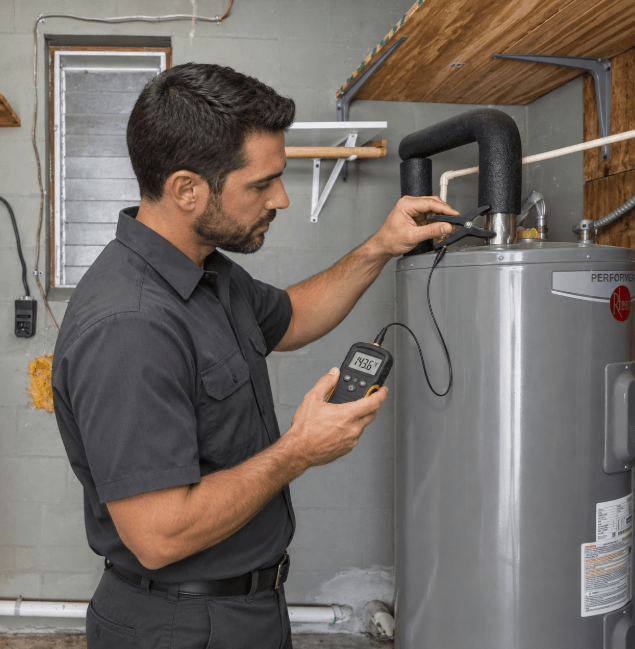
Test electric heating elements and thermostats.
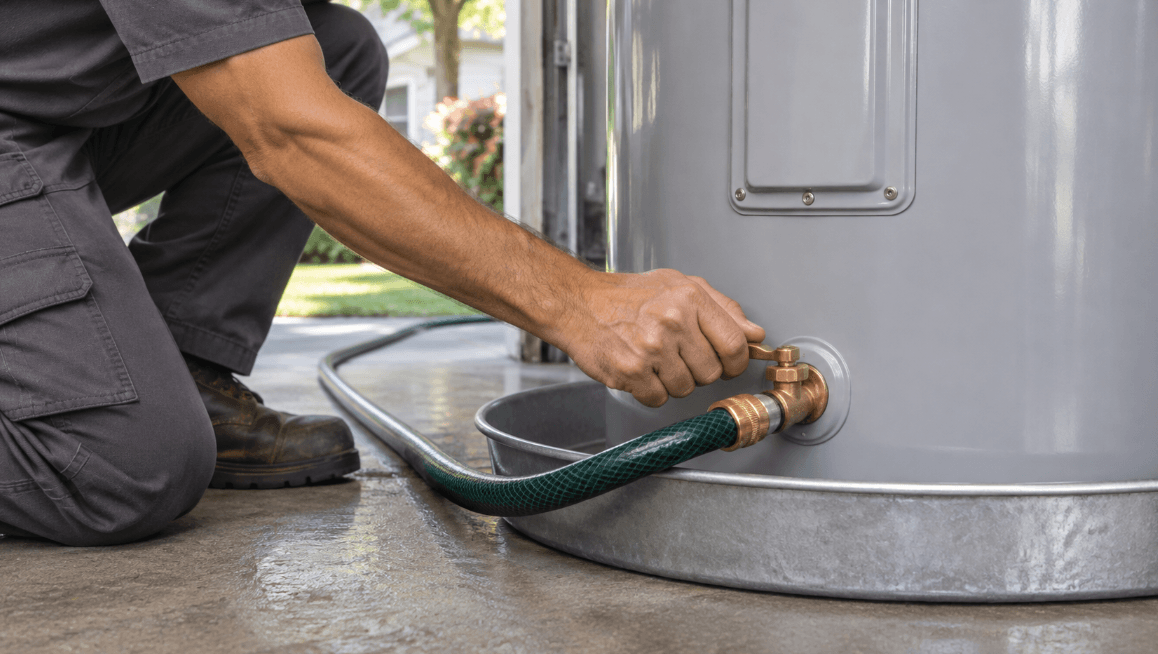
Check gas ignition, drain valves, and sediment when the symptoms point there.
Open hot water at a second fixture. If the kitchen still runs hot while the shower goes cold then a shower cartridge or mixing issue may be the culprit. When several taps turn cold together we check the heater. A two-element electric tank can deliver a little hot water even with a failed lower element. The amount of usable hot water helps narrow down the fault.
Find the source of a leak
Water at the bottom can travel down from a connector above the tank. A drain valve, relief discharge or tank seam can also be the source. Relief-valve discharge calls for checking the underlying pressure or temperature condition. A failed tank body typically calls for replacement.
Compare the repair scope
Ask which part failed, whether it is available and whether parts coverage still applies. A routine flush addresses sediment. An electrical fault, ignition problem or active leak needs its own diagnosis.
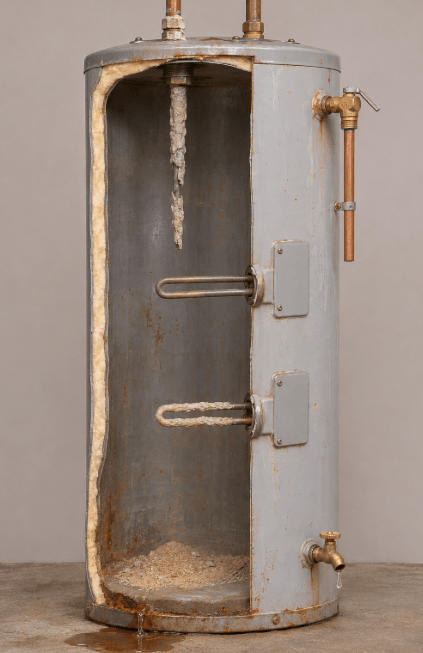
Five Places a Water Heater Can Fail
Match each numbered marker to the repair notes.
1 Temperature and pressure relief valve
Why it happens The valve may open because water pressure or temperature rises too high. A worn valve can also seep after the pressure returns to normal.
Repair Check what caused the discharge. Correct the underlying issue or replace a faulty valve with a properly rated one. Never cap the outlet.
2 Anode rod
Why it happens This rod gradually corrodes to help protect the steel tank. Water chemistry and use affect how quickly it wears.
Repair Replace a depleted rod while the tank is sound. A new rod cannot repair a tank that already leaks through its wall.
3 Electric elements and thermostats
Why it happens An element can fail electrically or collect mineral scale. A thermostat can also stop switching the element on or off correctly.
Repair Test the controls and elements. Replace the failed part or a leaking element gasket when the tank itself remains intact.
4 Bottom drain valve
Why it happens Grit can keep the valve from closing. A worn seal or a leak around the threads can also cause dripping.
Repair Identify the leak at the spout or threaded connection. Replace a damaged valve if the tank fitting can still hold a seal.
5 Sediment and rust at the base
Why it happens Minerals settle at the bottom and can cause rumbling or clog the drain. A puddle with rust may come from a corroded tank or a leak that ran down from above.
Repair or replace Flush sediment from a sound tank when appropriate. Replace the heater if water comes through the tank wall or seam.
Frequently Asked Questions
Does flushing fix a heater that will not heat?+
A flush addresses sediment in a serviceable tank. Loss of heat can also come from a failed element, thermostat or ignition system and needs diagnosis.